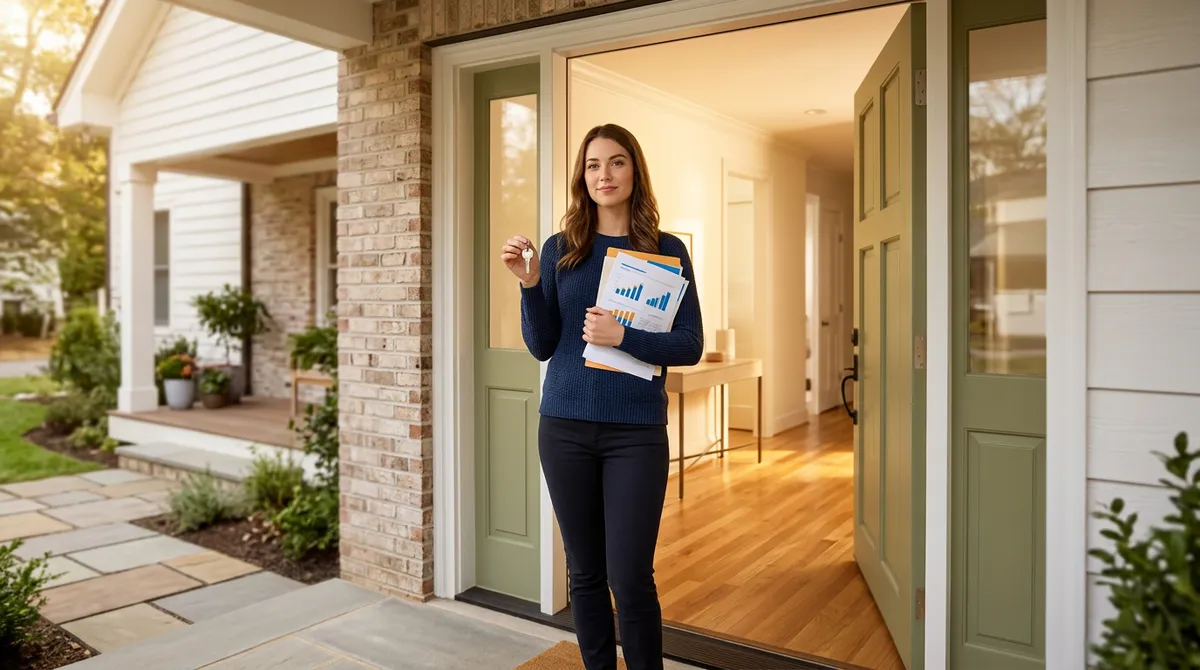
Key Takeaways
-
Check your credit score early, as FHA loans accept scores as low as 580 with just 3.5% down payment, making homeownership more accessible than many realize.
-
Explore down payment assistance programs offering grants up to $10,000, which can significantly reduce upfront costs for first-time home buyers.
-
Create a realistic home buying budget by keeping total housing costs between 31-40% of your gross monthly income, considering all related expenses.
-
Get preapproved for a mortgage within 24 hours by preparing key documents like pay stubs, tax returns, and bank statements.
-
Use the 'Reality Check List' method: categorize home requirements into needs, wants, and nice-to-haves to focus your home search effectively.
Becoming a first-time home buyer in 2026 is one of the most exciting milestones you’ll ever achieve. If you’re like most people, you’ve probably spent years dreaming about having your own place—somewhere you can paint the walls any color you want, build equity instead of paying rent, and create lasting memories with your family. The good news? Homeownership is more achievable than you might think, even with today’s market conditions. With low down payment options starting at just 3-3.5% and various assistance programs offering grants up to $10,000, your dream home could be closer than you realize. In this guide, I’ll walk you through the four essential steps every first-time home buyer needs to know to make your journey as smooth as possible.

Step 1: Check Your Credit and Get Preapproved
Before you start scrolling through home listings or attending open houses, you need to understand where you stand financially. Your credit score is the key that unlocks the door to homeownership, and knowing your number is the first critical step in your journey.
Understanding Your Credit Score Requirements
Here’s the truth: you don’t need perfect credit to buy a home in 2026. Many first-time buyers worry that their credit isn’t good enough, but FHA loans have made homeownership accessible to people with credit scores as low as 580. If your score is between 500-579, you can still qualify, though you’ll need a slightly higher down payment of around 10%. For conventional loans, most lenders look for scores of 620 or higher.
Take some time to review your credit report from all three major bureaus. Look for errors or outdated information that might be dragging your score down. Sometimes, simply disputing inaccurate items can boost your score by 20-30 points.
Getting Preapproved Within 24 Hours
Once you know your credit situation, it’s time to get preapproved for a mortgage. This isn’t the same as prequalification—preapproval is a commitment from a lender stating exactly how much they’re willing to loan you. In today’s competitive market, sellers take preapproved buyers much more seriously than those without this crucial document.
The best part? You can often get preapproved within 24 hours. You’ll need to provide:
- Recent pay stubs (typically the last two months)
- Tax returns from the past two years
- Bank statements showing your savings and assets
- Photo identification
- Employment verification
Getting preapproved early gives you a clear picture of your budget before you fall in love with a home that’s out of reach. It’s like having a roadmap before you start your journey—you know exactly where you can go. For expert guidance on navigating the Jacksonville market and finding the right lender, Jeremy Torres Real Estate has helped countless first-time buyers secure their dream homes with confidence.

Step 2: Explore Low Down Payment Options and Assistance Programs
One of the biggest myths about buying a home is that you need 20% down. That’s simply not true anymore, especially for first-time buyers in 2026. There are numerous programs designed specifically to help people like you get into a home with much less money upfront.
FHA Loans: Your Best Friend as a First-Time Buyer
FHA loans are backed by the Federal Housing Administration and offer some of the most flexible requirements for first-time home buyers. With down payments as low as 3.5% of the purchase price, these loans make homeownership accessible even if you haven’t saved a massive chunk of cash. According to the National Association of Realtors, the median down payment for first-time buyers is just 9% of the home’s purchase price.
Let’s put this in perspective with real numbers:
| Home Price | 3.5% Down Payment | 9% Down Payment | 20% Down Payment |
|---|---|---|---|
| $250,000 | $8,750 | $22,500 | $50,000 |
| $300,000 | $10,500 | $27,000 | $60,000 |
| $350,000 | $12,250 | $31,500 | $70,000 |
As you can see, the difference between an FHA loan and a traditional 20% down payment can be tens of thousands of dollars. That’s money you can use for furniture, renovations, or building your emergency fund.
Down Payment Assistance Programs Worth Knowing
In 2026, several major lenders are offering grants and assistance programs that can bridge the affordability gap. These aren’t loans you have to pay back—they’re actual grants that help cover your down payment and closing costs.
Here are some programs currently available:
- Bank of America Down Payment Grant: Offers up to $10,000 (or 3% of the purchase price) in grant money for eligible first-time buyers in certain areas
- Chase Homebuyer Grant: Provides up to $5,000 in eligible neighborhoods to help with down payment and closing costs
- State and Local Programs: Many states and cities offer their own assistance programs with grants ranging from $2,500 to $15,000
- Employer Assistance Programs: Some companies offer homebuyer benefits as part of their employee packages
Don’t leave this money on the table. Research what programs are available in your area and talk to your lender about combining multiple assistance options. You can use a mortgage payment calculator to see how different down payment amounts affect your monthly payments and total loan cost.

Step 3: Create Your Reality Check List and Budget
Now comes the fun part—but also the part where many first-time buyers get into trouble. It’s time to create a realistic budget and wishlist for your new home. This step requires both dreaming big and staying grounded in financial reality.
Understanding Your True Budget
Your mortgage preapproval amount is the maximum you can borrow, but it’s not necessarily what you should borrow. Lenders will approve you for the highest amount possible, but you need to consider your lifestyle and other financial goals.
A good rule of thumb is to keep your total housing costs below 31-40% of your gross monthly income. This includes:
- Principal and interest on your mortgage
- Property taxes
- Homeowner’s insurance
- HOA fees (if applicable)
- PMI (private mortgage insurance, if you put down less than 20%)
- Maintenance and repairs (budget at least 1% of home value annually)
Let’s look at a practical example. If your gross monthly income is $6,000, you should aim to keep total housing costs between $1,860 and $2,400 per month. This leaves room for other expenses like car payments, student loans, groceries, and saving for the future.
The Reality Check List Method
Here’s a strategy that works brilliantly for first-time home buyers: create three separate lists for your ideal home.
Needs (Non-Negotiable Essentials):
- Number of bedrooms required for your family
- Proximity to work or schools
- Safe neighborhood
- Essential accessibility features
Wants (Important but Flexible):
- Updated kitchen
- Garage
- Backyard
- Specific architectural style
Nice-to-Haves (Bonus Features):
- Swimming pool
- Finished basement
- Walk-in closets
- Smart home features
This approach helps you stay focused during your home search. When you find a property that meets all your needs and most of your wants, you know you’ve found a winner—even if it doesn’t have every nice-to-have feature. Remember, you can always add improvements over time as your budget allows.
Don’t Forget Closing Costs
Many first-time buyers focus so much on the down payment that they forget about closing costs. These typically range from 1.5-5% of the purchase price and include:
| Closing Cost Item | Typical Range | Purpose |
|---|---|---|
| Home Appraisal | $300-$500 | Determines market value |
| Home Inspection | $300-$600 | Identifies potential issues |
| Loan Origination Fee | 0.5-1% of loan | Lender’s processing costs |
| Title Insurance | $500-$1,500 | Protects ownership rights |
| Property Taxes | Varies by location | Prepaid at closing |
The good news is that some sellers will agree to pay a portion of your closing costs, especially in a buyer’s market. Your real estate agent can negotiate this on your behalf during the offer process.

Step 4: Schedule Inspections and Negotiate Repairs
You’ve found the perfect home, made an offer, and it’s been accepted—congratulations! But before you pop the champagne, there’s one more crucial step: the home inspection. This is your opportunity to discover any hidden issues before you commit to the purchase.
What a Home Inspection Covers
A professional home inspector will examine the property from top to bottom, looking at:
- Structural elements: Foundation, walls, floors, and overall stability
- Roof condition: Shingles, gutters, and potential leak areas
- Electrical systems: Wiring, panels, outlets, and safety compliance
- Plumbing: Pipes, water heater, drainage, and water pressure
- HVAC systems: Heating and cooling functionality and efficiency
- Pest inspection: Termites, rodents, and other potential infestations
- Water damage: Signs of leaks, mold, or moisture issues
Budget $300-$600 for a thorough inspection. This is not the place to cut corners. A good inspector can save you thousands of dollars by identifying problems before you close on the home.
Negotiating Based on Inspection Findings
Once you receive the inspection report, you have several options depending on what was found:
If minor issues are discovered: You might ask the seller to make repairs before closing or request a credit at closing to handle the fixes yourself.
If major problems surface: You can renegotiate the purchase price, ask for significant repairs, or in extreme cases, walk away from the deal if you have an inspection contingency in your contract.
If everything looks good: You can proceed with confidence knowing you’re making a sound investment.
The key is to focus on significant issues that affect the home’s safety, structure, or value. Don’t get hung up on cosmetic imperfections like a scratched countertop or worn carpet—these are easy fixes you can tackle after moving in.
Final Walkthrough Before Closing
Right before closing day, schedule a final walkthrough of the property. This is your last chance to verify that:
- All agreed-upon repairs have been completed
- The home is in the same condition as when you made your offer
- All appliances and fixtures that should be included are still there
- No new damage has occurred
If everything checks out, you’re ready to sign the papers and get your keys. If you discover problems, you have the right to delay closing until they’re resolved.
Throughout this entire process, having an experienced real estate professional by your side makes all the difference. To search available homes in the Jacksonville area and see what options fit your budget and needs, start exploring listings today with expert guidance every step of the way.
Making Your First-Time Home Buying Dream a Reality
Buying your first home in 2026 is absolutely achievable, even if you don’t have a massive down payment saved up. By following these four essential steps—getting preapproved, exploring low down payment options, creating a realistic budget, and conducting thorough inspections—you’ll be well-prepared to navigate the home buying process with confidence.
Remember, homeownership isn’t just about having a place to live. It’s about building wealth, creating stability for your family, and achieving financial independence. Every mortgage payment builds equity in an asset you own, rather than contributing to someone else’s investment. In Jacksonville’s growing market, now is an excellent time to take advantage of population growth and strong job opportunities.
The journey from renter to homeowner might seem overwhelming at first, but thousands of first-time buyers successfully make this transition every year. With low down payment options starting at 3-3.5%, assistance programs offering up to $10,000 in grants, and expert guidance to navigate each step, your dream of homeownership is closer than you think.
Don’t wait for the “perfect” time or until you have 20% saved. Start today by checking your credit, getting preapproved, and exploring what’s available in your price range. The sooner you start, the sooner you’ll be holding the keys to your very own home.
Ready to take the first step toward homeownership in Jacksonville? Contact Jeremy Torres Real Estate today for personalized guidance throughout your home buying journey. With years of experience helping first-time buyers achieve their dreams and a proven track record of success, Jeremy understands exactly what it takes to get you from renting to owning. You can also check out what happy homeowners are saying by visiting our reviews on Google to see how we’ve helped countless families just like yours make homeownership a reality.
FAQs
Q: What is the minimum down payment for first-time home buyers in 2026?
A: First-time home buyers can get started with as little as 3-3.5% down through FHA loans and similar programs. Some special assistance programs even offer 0% down payment options for qualified buyers. The median down payment for first-time buyers is around 9% of the purchase price, but you definitely don’t need 20% to get started on your homeownership journey.
Q: How long does it take to get preapproved for a mortgage?
A: You can typically get preapproved within 24 hours if you have all your documents ready. You’ll need recent pay stubs, tax returns from the past two years, bank statements, and photo ID. Getting preapproved early is super important because it shows sellers you’re a serious buyer and helps you understand exactly what you can afford before you start house hunting.
Q: What credit score do I need to buy my first home?
A: You don’t need perfect credit to buy a home. FHA loans accept credit scores as low as 580 with just 3.5% down, and some lenders will work with scores between 500-579 if you can put down 10%. For conventional loans, most lenders look for scores around 620 or higher, but don’t let a lower score discourage you from exploring your options.
Q: What assistance programs are available for first-time home buyers?
A: There are several great programs in 2026, including Bank of America’s grant of up to $10,000 (3% of purchase price) and Chase’s $5,000 homebuyer grant in eligible neighborhoods. Many states and local governments also offer assistance ranging from $2,500 to $15,000. These are grants you don’t have to pay back, making them an amazing resource to help cover your down payment and closing costs.
Q: How much should I budget for closing costs?
A: Plan to budget between 1.5-5% of your home’s purchase price for closing costs. This covers things like home appraisals ($300-$500), inspections ($300-$600), loan origination fees, title insurance, and prepaid property taxes. The good news is you can sometimes negotiate with the seller to pay a portion of these costs, especially in a buyer’s market, which can save you thousands of dollars at closing.