
Key Takeaways
-
Exclusive right-to-sell listings offer maximum motivation for agents to market your property aggressively, typically resulting in faster sales and higher prices.
-
The Multiple Listing Service (MLS) provides critical exposure, connecting your property with thousands of potential buyers and real estate agents.
-
Choosing the right listing type is crucial – open listings often result in minimal marketing effort, while exclusive listings provide comprehensive representation.
-
Residential and commercial listings require different marketing strategies, with residential focusing on emotional appeal and commercial emphasizing financial data.
-
A professional listing agent provides comprehensive services including accurate pricing, professional marketing, negotiation, and contract management.
Have you ever wondered what happens behind the scenes when a home goes on the market? Real estate listings are the foundation of every property transaction, yet many buyers and sellers don’t fully understand how they work. Whether you’re preparing to sell your Jacksonville home or searching for your dream property, understanding real estate listings can save you thousands of dollars and help you make smarter decisions.
A real estate listing is a written agreement between a property owner and a real estate broker that gives the broker permission to market and sell the property. Think of it as your property’s official debut to the world of potential buyers. These agreements outline everything from commission rates to marketing rights, creating a clear roadmap for how your property will be represented in the market.
In 2026, the real estate landscape in Jacksonville continues to thrive, with diverse neighborhoods and growing opportunities for both buyers and investors. Understanding the different types of listings and how they work is more important than ever, especially as the market evolves and new technologies change how properties are bought and sold.
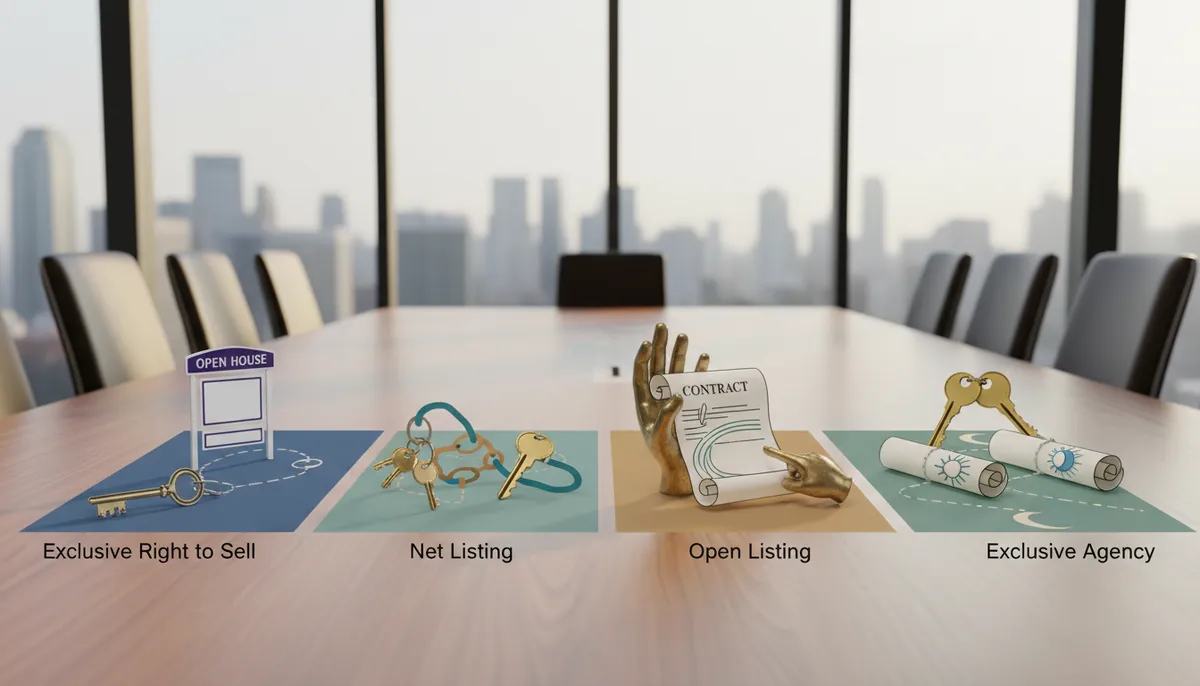
Understanding the Four Main Types of Listing Agreements
Not all listing agreements are created equal. In fact, there are four distinct types of listings that property owners can choose from, each offering different levels of commitment, protection, and compensation structures. Let’s break down each type so you can make an informed decision about which might work best for your situation.
Exclusive Right-to-Sell Listings
The exclusive right-to-sell listing is the most widely-used listing agreement in the real estate industry, and for good reason. When you sign this type of agreement, your broker receives a commission regardless of who actually finds the buyer—whether it’s the broker, another agent, or even you as the seller. This might sound like a big commitment, but it comes with significant advantages.
With an exclusive right-to-sell listing, your agent has maximum motivation to market your property aggressively. They’ll invest time, money, and resources into professional photography, online marketing, open houses, and networking because they know their efforts will be compensated. This type of listing typically results in faster sales and higher prices because your agent pulls out all the stops.
Here’s what you can expect with an exclusive right-to-sell listing:
- Comprehensive marketing across multiple platforms and channels
- Professional representation at all showings and negotiations
- Access to the Multiple Listing Service (MLS) for maximum exposure
- Dedicated agent commitment with no competition from other brokers
- Clear commission structure with no surprises or disputes
- Professional guidance through inspections, appraisals, and closing
At Jeremy Torres Real Estate, I exclusively use this type of listing because it creates the best outcomes for my clients. When sellers commit to a single agent, I can commit my full resources to getting their property sold quickly and for top dollar.
Open Listings
Open listings represent the opposite end of the spectrum. These are non-exclusive contracts that allow sellers to engage multiple brokers simultaneously. The commission is paid only to the broker who brings a ready, willing, and able buyer to the table. If you sell the property yourself, you don’t owe anyone a commission.
While this might sound appealing on the surface, open listings come with significant drawbacks. Because no single agent has exclusive rights, none of them have strong motivation to invest heavily in marketing your property. You might end up with minimal exposure, fewer showings, and ultimately a longer time on the market.
Open listings work best in these specific situations:
- Properties in extremely hot markets where homes sell themselves
- Unique properties with built-in buyer pools
- Sellers with extensive personal networks who can find buyers independently
- Commercial properties where multiple brokers specialize in different buyer types
Exclusive Agency Listings
Exclusive agency listings fall somewhere in the middle. With this arrangement, you work with one broker, but you retain the right to sell the property yourself without owing a commission. However, if the broker brings a buyer, they must prove they were the “procuring cause” of the sale to earn their commission.
These listings are uncommon in residential transactions due to increased potential for disputes. What happens if you find a buyer who also saw your broker’s marketing? Who gets credit? These gray areas can create friction and even legal battles that nobody wants to deal with.
Exclusive agency listings might work for:
- Sellers with specific buyers already in mind
- Properties where the owner has unique access to potential buyers
- Situations where the seller wants professional backup but plans to do most of the work
- Commercial properties where owner relationships play a major role
Net Listings
Net listings involve an agent agreeing to sell a property for a set minimum price. Anything above that minimum belongs to the agent as commission. While this might sound like an interesting arrangement, net listings are actually illegal in many states and highly discouraged in others due to potential conflicts of interest.
The problem with net listings is obvious: the agent’s interests may not align with yours. If you set a net price of three hundred thousand dollars and the agent sells for four hundred thousand dollars, they pocket the entire one hundred thousand dollar difference. This creates incentives for agents to potentially mislead sellers about true market value.
I never recommend net listings to my clients in Jacksonville. The potential for ethical issues and legal problems far outweighs any perceived benefits. Stick with transparent commission structures where everyone’s interests align.

What Types of Properties Can Be Listed
One of the most common questions I hear from clients is whether their particular property can be listed on the Multiple Listing Service. The good news? Almost every type of property can be listed on MLS systems, giving sellers access to thousands of potential buyers and their agents.
Here’s a comprehensive breakdown of property types that can be listed:
| Property Type | Listing Considerations | Target Buyers |
|---|---|---|
| Single-Family Homes | Most common listing type with straightforward marketing | Families, first-time buyers, investors |
| Condominiums | Requires HOA documentation and fee disclosure | Young professionals, downsizers, investors |
| Multi-Family Properties | Income potential highlighted, tenant situations disclosed | Investors, owner-occupants |
| Townhouses | Similar to condos but with different ownership structures | First-time buyers, small families |
| Vacant Land | Zoning and development potential are key selling points | Developers, builders, investors |
| Commercial Buildings | Requires specialized marketing and different MLS rules | Business owners, commercial investors |
When I work with clients in Jacksonville’s diverse neighborhoods—from San Marco to Mandarin—I customize the listing approach based on the property type and target audience. A luxury waterfront home requires different marketing than a starter home for first-time buyers.

The Difference Between Residential and Commercial Listings
Residential and commercial MLS listings differ significantly, and understanding these differences is crucial if you’re involved in either market. The marketing strategies, disclosure requirements, and even the commission structures can vary dramatically.
Residential listings focus on lifestyle features and emotional appeal. When marketing a home in Jacksonville’s family-friendly suburbs, I emphasize things like school districts, community amenities, and the warm, inviting atmosphere that makes a house a home. Professional staging, beautiful photography, and virtual tours help potential buyers envision their family’s future.
Commercial listings, on the other hand, require unique advertising methods and special rules. These properties are all about numbers—cap rates, net operating income, square footage costs, and return on investment. Commercial buyers want to see rent rolls, expense histories, and financial projections. The emotional component takes a back seat to cold, hard data.
Key differences include:
- Marketing channels – residential uses consumer platforms while commercial targets investor networks
- Disclosure requirements – commercial properties have more complex legal obligations
- Showing processes – residential allows flexible showings while commercial often requires appointments
- Negotiation timelines – commercial deals typically take longer with more due diligence
- Commission structures – commercial commissions may be negotiated differently

The Role of the Listing Agent
A listing agent (also called a seller’s agent) represents the property owner throughout the selling process. This role goes far beyond just putting a sign in the yard and waiting for offers. Your listing agent is your advocate, marketing expert, negotiator, and guide through one of the biggest financial transactions of your life.
Here’s what a professional listing agent like myself brings to the table:
- Accurate pricing based on comparative market analysis and local trends
- Professional marketing including photography, videography, and online presence
- MLS listing creation with compelling descriptions and key details
- Open house coordination and private showing management
- Offer evaluation and strategic negotiation on your behalf
- Contract management and deadline tracking
When you work with me at Jeremy Torres Real Estate, you’re getting someone who treats your property sale as if it were my own. I’ve helped generate over six million dollars in sales volume and saved clients over one hundred thousand dollars through strategic negotiation and market expertise. Growing up in apartments, I understand the profound significance of homeownership, and I bring that passion to every listing.
Understanding the Listing Contract
The listing contract is a legally binding document that specifies all the details of your agreement with your broker. This isn’t just a handshake deal—it’s a comprehensive contract that protects both parties and ensures everyone understands their rights and responsibilities.
Every listing contract should include these essential elements:
- Property description and address with legal description
- Listing price and any price adjustment terms
- Commission rate and how it will be split between agents
- Contract duration with start and end dates
- Marketing rights and responsibilities of the broker
- Seller’s disclosure obligations and property condition statements
- Terms for contract termination or extension
- Any special conditions or contingencies specific to the property
Most listing contracts in Jacksonville run for six months, though this can be negotiated. The contract gives your agent exclusive marketing rights during this period, and it’s important to choose an agent you trust because you’ll be working together closely throughout the process.
How Listing Commission Works in 2026
Commission structures have evolved in recent years, and understanding how agents get paid helps you make informed decisions. Traditionally, listing commissions range from five to six percent of the sale price, split between the listing agent and the buyer’s agent. However, this is always negotiable and can vary based on market conditions, property type, and services provided.
Here’s a typical commission breakdown:
- Total commission: six percent of sale price
- Listing agent/broker: three percent
- Buyer’s agent/broker: three percent
- Each brokerage takes a percentage before paying their agent
- The seller typically pays both sides of the commission at closing
With an exclusive right-to-sell listing, commission terms are clear from the start. You know exactly what you’ll pay, and your agent knows they’ll be compensated for their work. This clarity prevents disputes and allows everyone to focus on getting your property sold.
At Coastal Realty Jax, where I’m proudly affiliated, we maintain transparent commission structures that align with industry standards while providing exceptional value through our comprehensive services and proven track record.
The Power of MLS Listings
The Multiple Listing Service (MLS) is the most powerful tool in real estate marketing. When your property is listed on the MLS, it becomes visible to thousands of real estate agents and their buyers. In Jacksonville’s competitive market, MLS exposure is essential for getting top dollar for your property.
MLS listings provide several critical benefits:
- Maximum exposure to qualified buyers working with agents
- Accurate, standardized property information that buyers can trust
- Professional photos and detailed descriptions that highlight your property’s best features
- Market statistics and comparable sales data for informed pricing
- Integration with consumer websites like Zillow and Realtor.com
- Communication tools that facilitate offers and negotiations
When I list a property, I ensure the MLS listing is comprehensive, accurate, and compelling. Every detail matters—from the description that captures your home’s character to the photos that showcase its best features. This attention to detail is why my listings generate strong interest and multiple offers.
You can view my sold listings to see examples of how I market properties effectively. With over seventy-five hundred social media followers, I also leverage digital platforms to give your property exposure beyond traditional MLS channels.
Common Listing Mistakes to Avoid
Even with professional representation, sellers sometimes make mistakes that hurt their chances of a successful sale. Being aware of these pitfalls helps you avoid them and maximize your property’s appeal to buyers.
Here are the most common listing mistakes I see:
- Overpricing based on emotion rather than market data
- Poor presentation with cluttered spaces and deferred maintenance
- Limited availability for showings that reduces buyer access
- Incomplete disclosures that create buyer distrust
- Ignoring agent feedback and refusing to make adjustments
- Choosing the wrong listing type for your situation
- Hiring an agent based solely on promised list price rather than expertise
The biggest mistake? Trying to sell without professional representation or choosing an agent who doesn’t understand your local market. Jacksonville’s neighborhoods—from the beaches to Clay County suburbs—each have unique characteristics that affect pricing and marketing strategies. Local expertise matters.
Technology’s Impact on Real Estate Listings
The real estate industry has transformed dramatically over the past decade, and 2026 continues to bring innovations that change how properties are listed and sold. From virtual tours to AI-powered pricing tools, technology now plays a central role in successful listings.
Modern listing technology includes:
- 3D virtual tours that let buyers explore properties from anywhere
- Drone photography showcasing properties from unique aerial perspectives
- Digital staging that helps buyers visualize spaces differently
- AI-powered pricing algorithms that analyze market trends in real-time
- Mobile apps that send instant notifications when new properties match buyer criteria
- Video walkthroughs that provide more context than photos alone
I embrace these technologies to give my clients a competitive edge. When you list with Jeremy Torres Real Estate, your property gets the full digital treatment—professional photography, video tours, social media marketing, and strategic online placement that reaches buyers where they’re searching.
Follow my Instagram, Facebook, or TikTok to see how I leverage social media to market properties and connect with potential buyers in innovative ways.
Making Your Listing Stand Out
In Jacksonville’s active real estate market, standing out from the competition is essential. Buyers have choices, and your listing needs to grab attention and hold it. This is where professional expertise and strategic marketing make all the difference.
Key strategies for standout listings include:
- Professional photography that captures your home’s best angles and lighting
- Compelling descriptions that tell a story and evoke emotion
- Strategic pricing that attracts attention without leaving money on the table
- Home staging that helps buyers envision their future
- Targeted marketing to the most likely buyer demographics
- Flexible showing schedules that accommodate serious buyers
- Quick response times to inquiries and showing requests
My team has been involved in over twenty-five hundred flips in Jacksonville, giving us unique insight into what buyers want and what sells quickly. Whether you’re selling a luxury property in San Marco or an investment opportunity in Duval County, I know how to position your listing for maximum impact.
Preparing Your Property for Listing
Before your property hits the market, preparation is key. The condition and presentation of your home directly affect how quickly it sells and the price you receive. While this requires some effort and potentially some investment, the return is almost always worth it.
Essential preparation steps include:
- Deep cleaning every room, including carpets and windows
- Decluttering and depersonalizing spaces to help buyers imagine themselves living there
- Making necessary repairs—fixing leaky faucets, patching holes, addressing obvious issues
- Improving curb appeal with landscaping, fresh paint, and clean exteriors
- Updating outdated fixtures or features if budget allows
- Organizing closets and storage to show maximum space
I provide detailed pre-listing consultations where we walk through your property together and identify opportunities for improvement. Sometimes small changes make a big difference—a fresh coat of paint, updated light fixtures, or professionally cleaned carpets can add thousands to your sale price.
Conclusion
Understanding real estate listings empowers you to make smarter decisions whether you’re buying or selling property in Jacksonville. From choosing the right type of listing agreement to leveraging technology and professional expertise, every detail matters in today’s competitive market.
The exclusive right-to-sell listing remains the gold standard for sellers who want maximum exposure, dedicated representation, and the best possible outcome. When you partner with an experienced agent who understands your local market, you’re not just listing a property—you’re strategically positioning an asset for optimal results.
At Jeremy Torres Real Estate, I bring passion, expertise, and proven results to every listing. With my background helping families achieve homeownership and my deep knowledge of Jacksonville’s diverse neighborhoods, I’m committed to making your real estate goals a reality. Whether you’re in Clay County, Duval County, St. Johns County, Nassau County, or Flagler County, I have the local expertise to guide you through every step.
Ready to list your property or find your dream home? Contact me today to discuss your real estate goals, or check out what clients are saying by visiting my reviews on Google. You can also browse available homes on my search portal to see what’s currently on the market. Let’s work together to make your real estate dreams come true in Jacksonville’s thriving market!
FAQs
Q: What is the difference between exclusive right-to-sell and exclusive agency listings?
A: With an exclusive right-to-sell listing, the broker earns a commission no matter who finds the buyer—even if the seller finds them. With an exclusive agency listing, the seller can find their own buyer without paying commission, but the broker earns commission if they bring the buyer. Exclusive right-to-sell is more common because it motivates agents to invest heavily in marketing your property.
Q: How long does a typical listing agreement last?
A: Most listing agreements in Jacksonville run for six months, though this timeframe is negotiable. The duration gives your agent enough time to market the property effectively, adjust strategies if needed, and find the right buyer. If your property doesn’t sell within the contract period, you can choose to extend, relist with the same agent, or explore other options.
Q: Can I list my property on MLS without a real estate agent?
A: Generally, no—you need a licensed real estate broker to list your property on the MLS. However, some companies offer flat-fee MLS listing services where you pay a set fee for basic listing placement. This approach lacks the full-service marketing, negotiation expertise, and professional guidance that a dedicated listing agent provides, often resulting in longer market times and lower sale prices.
Q: What happens if my property doesn’t sell during the listing period?
A: If your property doesn’t sell before the listing contract expires, you have several options. You can extend the agreement with your current agent, relist with a different agent, take the property off the market temporarily, or reconsider your pricing and marketing strategy. A good agent will analyze what didn’t work and suggest adjustments before any extension or new listing.
Q: How much commission do real estate agents typically earn from listings?
A: Real estate commissions in 2026 typically range from five to six percent of the sale price, split between the listing agent and buyer’s agent. This means each agent usually receives around three percent. However, commissions are always negotiable and can vary based on market conditions, property type, price point, and the services provided. The seller typically pays the total commission at closing.